Category Archives: Tools for the Task

What’s a SWOT analysis and how do I do that?

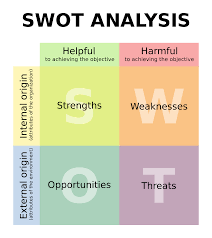
SWOTAre you developing a new plan, strategy, or service?  For any of these (and for charting the course of your organization), a critical step that you do not want to miss is the development of a Strengths-Weaknesses-Opportunities-Threats (SWOT) analysis.
It is best done in collaboration with your team; and in order to do a good job, you’ll need to do some homework.

The best template tool I’ve found for this purpose is offered as a free download at DIY (Development Impact and You). And by the way, DIY offers a wide array of hugely valuable templates and tools, with simple guidelines on using them. If you are embarked on strategic planning or service design, bookmark this site.

Be totally honest when you do a SWOT analysis, because fudging negatives and overemphasizing positives will not help you.  Done right, the exercise can help you to surface some high potential activities or design elements that you very well might not have thought about otherwise.

DIY has a good explanation at the link provided about how to use the SWOT.  Don’t choose too many items to put in each box – I’ve found that it’s helpful to let the group brainstorm as many as they like, and then narrow the selection down to the top 5-6 at most.


Instagram posts faster growth rates than Facebook and Twitter

instagramAccording to an article by the Content Marketing Institute, Instagram use grew faster than other leading social media channels from 2012-2014.  The Pew Research Center offers great research on this, along with insights into the use of technology and social media by US teens. Nearly 75% of teens either have or have access to a smartphone, and over 90% go online daily; with more than half going online several times a day.

While I hear from colleagues in education that students frequently report that “they don’t really use Facebook anymore” (because it has lost it’s cool factor) – these reports don’t agree with the research. According to Pew, 71% of all teens report using Facebook, and it remains the leading social media channel for this group.

You can find the original Pew Research report here.

The increasing popularity of Instagram has also led to an interesting development among social marketers who use images as a central part of their strategy. Instagram excels in user generated content, and the majority of images found there are far from the perfectly stylized, high quality professional photographs that companies and organizations typically create and use for marketing.

As a result, organizations and companies are investing more time in the creation of art and photographic images with image errors and imperfections. These are being posted in  content campaigns in an increasing and intentional effort to make these images look like user generated content – authentic.

Why wait to adopt new social media channels?

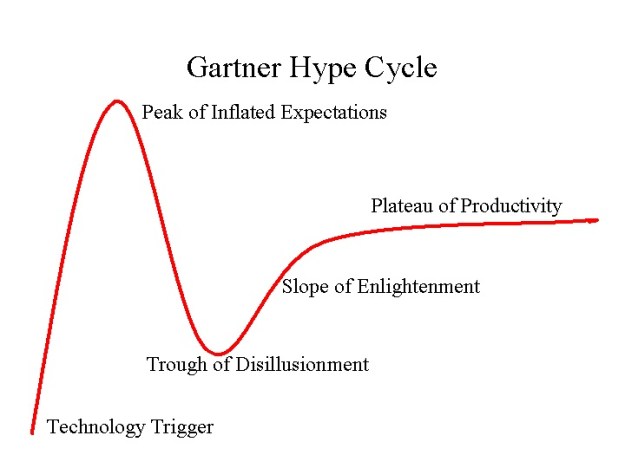
Keep the 5 Step “Hype” Cycle in mind to make your adoption of new channels more intentional.

Gartner, Inc. explains their research findings into the adoption of emerging technologies in clear phases in this article. Here’s a quick look:


Gartner-Hype-CycleApplied to your organization’s adoption of new social media, you will need to keep in mind how risk-friendly or risk-averse you want to be in seeking out new types of channels. While emerging social media tools frequently look free at the outset (no out of pocket costs), the downside cost of investing the time necessary to identify, understand, and populate new social media channels can be prohibitive. Depending on your resources for communication and content creation, you may be an organization that wants to take a wait and see stance until others have made it through the disillusionment phase and you can begin to see successful applications discovered through enlightenment.

But my audience is all over the new channel!

Never forget:  I’ve talked more than once about remembering to regularly research your target audiences. Where are they, and where do they congregate? Matching that data up with a good understanding of the cycle of adoption for your audiences can also help you to weather the inflated expectations phase without jumping prematurely into what looks like the newest biggest thing; only to find your audience members abandoning your channel in droves.

How do you know if your video content is engaging?

videoWhat kinds of metrics will give you a quick feel for how interesting and engaging your content is to viewers?

A common mistake is to accept the number of views for your online videos as a clear indication of success. It’s quite possible for visitors to click on your video by mistake, have it automatically open when shared on Facebook, or check it out only to close it again within seconds.  These views can inflate your statistics without proving out the actual value of your video.

Similarly, the number of shares may not tell you what you’d like to know. There are any number of reasons that viewers may share your video (and not all are positive).

For a more reliable indicator of engagement and value, think about focusing on a metric like watch time.  If you launch your videos on your YouTube channel, you can easily run a watch time report on your content assets.  YouTube offers fairly straightforward instructions on running a report online.

Think about how many viewers are watching your videos for 30 seconds or more. Better still, how many are watching the videos through to the end?  Where in your video is the biggest dropoff occurring?  By paying attention to your analytics with regular reporting and assessment, you may be able to identify trends that will help you to improve on your scripting and video development, helping you to capture attention quickly and keep it through to the end.

So What? Writing about benefits v. features

Image of Post it NotesAs you develop your branding messages and work from that to create more specific messages about what you do, always keep in mind that you are addressing your customers – and that they are looking for a solution to a problem.

While it’s important when designing a service to understand how the features of your service make it (and you) distinctive), be careful not to leave your marketing message there.  It’s only the first step in communicating effectively.

Features describe the content of the service or product: what does it do, what does it have, how does it work?

Features are important to the customers who will choose you from an array of options. Anyone who has referred to Consumer Reports before buying a car or appliance knows that we all love comparison charts and checklists – and those are all about features.  But the reason that your customers are looking for a set of features is to solve a problem. Even in business, that problem is likely to have a business component and a personal component.  The more you know about both, the more you can resonate with your audience.

Benefits are what your services or products will help your prospect to do, They describe what the customer wants to accomplish and how they will help to get there. This is the business or work goal that you designed for.

Best of all is when you understand your customer well enough to go deep, and speak to their personal motivation in the matter. People make decisions and selections in their professional lives all the time based on emotional and personal responses, justified with logical processes. Understanding what they are really feeling helps you to describe not just a benefit, but a really good benefit.

Good benefits address your customer’s motivation and personal investment in their project or goal, and identify meaning on a more emotional level.

I love Post it® Notes, so they’ll serve as a good example of features v. benefits here.

Feature:  Post it® Notes are designed in an array of colors and sizes that you can mix and match; and you can stick them in one place and then easily move them around when you change your mind about an idea.

Benefit: When I am designing a service, Post it® Notes allow me to work on ideas that have many parts and levels and capture evolving thought. They solve the problem of how to brainstorm together with a group without confusion or mess.

Good Benefit: Post it® Notes are an excellent collaboration tool that help me to lead while ensuring that I’m including all voices in the group in the process of creation, and discover ideas that I might not have otherwise surfaced.

Finally, when you are writing about your brand, product, or service, be mindful about going the extra mile to distinguish between serving up a list of features and really conveying what your offering will do for the customer; pragmatically and emotionally. As yourself:

  • So what? (ask it multiple times, not just once)
  • Why do they want that feature?
  • What are they trying to do that will make them choose this?
  • How do they want to feel about their project or goal – what are their personal motivations?
  • How will your offering create a positive emotional reaction for your customers?


Blogging isn’t easy

For those of you who have blogs or are entertaining the notion, you are likely to encounter the age-old challenge that we all have.  There is never enough time.

For any social media outlet that you manage, it’s absolutely essential to create an editorial calendar.  Decide the frequency with which you’d like to post, the type of posts you’ll develop, and who will author the post if you have multiple authors.

Without a plan, you’ll quickly find yourself looking at huge long “posting gaps”.

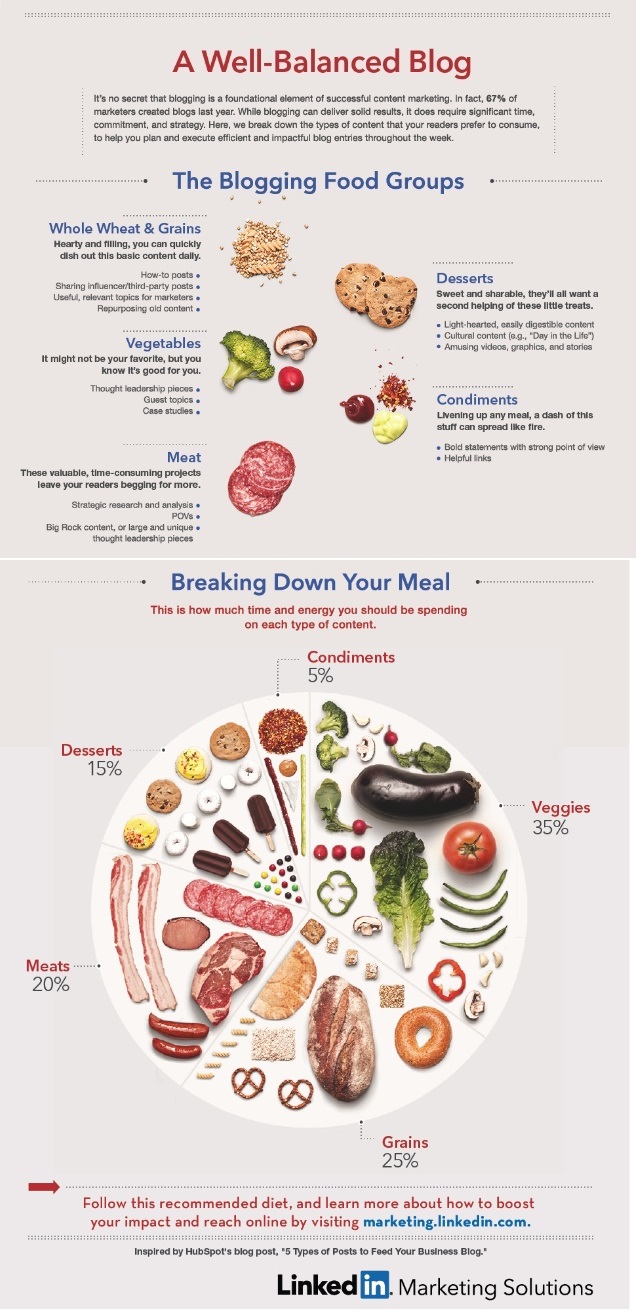
There’s a great infographic about this developed by LinkedIn Marketing Solutions.  It offers ideas about the different types of content you might offer, and encourages you to mix it up for a well-balanced content approach. I’ve pinned it to my office wall, in the hope that it will remind me to keep the faucet turned on and the content flowing – and I hope it will inspire you as well. Just click on the thumbnail to open the graphic, and have fun!

Well-balanced blog infographic from LinkedIn Marketing

From LinkedIn Marketing

Setting guidelines for your brand

wwrd_brandbook_xfeed-10_2048What is in a brand identity guide?

One of the final products of all of the work, thinking, and decision-making that will go into the establishment of your brand should be a document containing the elements that are needed to carry it forward. Without formally identifying your goal, primary messages, and voice, there’s little hope of ensuring the consistency in your communications that’s essential to keeping your brand remarkable and memorable.

Many are familiar with the brand style guide that is a typical outcome of working with a graphic designer on your logo, colors, and overall look. These visual elements should absolutely be a part of the overall brand identity guide; and the guide should tell readers where and how to use logos, icons, fonts, and so on. I would strongly recommend that you not forget your online presence. If you are working with an outside designer, it’s a good idea to identify a designer or firm that is experienced with mixed media and online elements; and consider asking them not only for logo treatment, fonts, and graphic icons and elements needed for your main ideas and topics, but also for website button and icon art – and if you are considering a redesign of your website, possibly menu and page mockups. This remains the best way to ensure that your visual look will carry through on the web; but not all graphic designers are comfortable with mixed media.

It doesn’t stop with your brand’s visual style guide.

The style guide for visual elements of your brand is one piece of the overall direction that you’ll provide in order to help staff, vendors, and external consultants or others fully understand your brand. Following, you’ll find my general list of the critical pieces of information that belong in any Brand Identity Guide.  Please feel free to use it as a checklist, or modify it for your project.  You can also download a copy of the  Brand Identity Guide; and we’ll talk more about a number of these elements and how to develop them in other posts.

Brand Identity Guide

Introduction for staff and other readers of the Guide

  • Why are we doing this work? What do we hope to achieve with a strong brand?
  • The overall voice and style of your brand and organization – description of the voice (with examples). How will we talk to our audiences? Formally, informally –what is the voice we strive to use and how will it be executed?
  • Your main audiences – who are your main audiences (customers), what do you want them to know and do? Will your voice vary depending on audience?
  • Are there cultural and social/emotional considerations in wording and imagery that you choose as part of your consistent voice to your audiences? What are the words we like to use and words we don’t like to use?
  • Storytelling voice: If human interest “stories” are important to your overall messages and communication plan, your Identity Guide should contain a sample of how one of these might look, along with notes about process – where will stories come from, who should they focus on, to what purpose, and how will you ask for and obtain permission from subjects.
  • What types of images or art should we consistently try to leverage in our communications?
  • Keywords we want our customers and community to use to describe us (embedded in the brand)

Brand Messaging (This is messaging that should be used by all, consistently, when talking about your organization in any context)

  • Tag Line: This should be 3-8 word statement that conveys the essence of your brand value quickly and in a memorable way. It can and should be viewed alongside the organization’s name and logo.
  • Naming System: when do we use the full name, acronym, with/without tag line; and how to use it in conjunction with the names of our distinct services, programs, or sub-brands. This also describes when to use the organization logo.
  • The organization’s Branding Statement – 60-80 words. The Branding Statement is not a description of the services you provide; rather it is meant to convey who and what you are and what your unique promise is to your customers. The branding statement should be developed in a way that can strongly position you against competitors and help you to stand out from others.
  • The summary description of the organization – boilerplate – use in press releases, fact sheets, annual reports, on the website, and as standard text in brochures and other pieces. What are you, how long have you been around, what services do you provide and to whom? This is not an exhaustive list – it should also be limited to 60-85 words at most.
  • Positioning statement: This is a valuable statement for internal use by your staff, sales, and communications specialists. From this statement, they’ll be able to readily draw the main components that differentiate you from competitors in terms of value, benefits, style and voice. These can be used in conversation, proposals, and the creation of ongoing messages. This will help to focus your stakeholders on how you are different from your competitors. This may or may not be accompanied by a brief analysis of main competitors – the strengths and weaknesses that are driving your positioning.
  • Statement of key benefits of your organization and brand for customers, stakeholders, and partners. This is a place to elaborate upon your brand statement by listing and clarifying what your primary brand benefits are. What’s best about you? Explain what you mean by the terms you use – words like excellent, high quality, caring, customizable can all become a blur due to over-use. What do they look like in relation to your work? What, exactly, are you promising? Remember that the benefits of your brand should be hallmarks that carry consistently across all that you do. If your brand has sub-brand, programs or services related to it, these are attributes that all should share.
  • Product/service features: If you have a specific product or service that is primary to your brand, your brand guide should contain the language that you want others to use in describing the most important features of the product or service. Features are not benefits. (See features v. benefits blog post) These are a straight up description of what your product or service includes or does that’s important to a purchase decision.
  • Content vocabulary and usage across media (the architecture): Where do we use these different pieces of content, and are they used differently in different communication efforts and media? How do we use our names, titles – what do we call our staff, and how do we put people in touch with them? Are there things we should say in every communication, things we should save for only some?

Visual Assets and Style Guidelines

  •  Logo: Depending on the length of your organization name and whether you’ve chosen to incorporate a tag line, you may need multiple versions of this graphic. Think about the simple logo art, logo with organization name shown stacked or horizontally, Logo with and without the tag line incorporated. Don’t forget to ask for versions that can be used in both print and on the web; and versions to use as avatars in social media. You’ll also need to consider a version that is shown in reverse white on a background color, if your guideline allows for this.
  • Color palette: what are the colors, both in print and on the web, that will belong to your brand? where and how will they be used?
  • Brand font and size, usage of bold, italics, etc. What kind of headlines and sub-heads will be consistently used in your communications?
  • Text elements: What line spacing will be your standard? How will you handle paragraphs and bullets in your corporate communications?
  • Icon graphics for main ideas: If you have main ideas or types of content that can best be displayed with a graphic icon, make those part of your style guide.
  • Background colors and white space – make sure to identify and direct how your communications will use white or other background colors in your efforts. This should not be left to chance or individual preference.
  • Visual elements associated with your brand. In creating communications about/for you brand, should they only use photography? Info graphics? Cartoon based artwork? What types of subjects should be shown, ideally? Are there guidelines about the size and placement of such graphics when used?

Website Guidelines

  • Website purpose
  • How and where your website URL will be shown.
  • Guidance on sub-URLs – when and where to use vanity URLs connected to your brand
  • Online elements: does your brand’s visual identity require a specific way to display links? Web icons? Button graphics?  How about menus? What font and type size should be used on the web?
  • Website target audiences – who are they, what are they seeking, and what do we want them to do on the site?
  • Suggested keywords for the site
  • Proposed menu focal points, based on purpose and target audiences
  • Draft sample messaging/copy for home page, how brand content vocabulary and voice will be executed on the web.
  • If available, page mockups should show how the main types of website pages will be laid out.


Ask not what the Press can do for you..

mediaAttended an interesting conference today produced by the Human Service Forum. The last session of the day offered a panel of local/regional members of the media, and they shared some illuminating thoughts, which I’ll pass on to you.  We heard from a regional news magazine, network television station, radio station, and local weekly and daily news representatives.  Some of what they had to say echoes the thoughts provided in my earlier post, on press releases.

In addition, just a few underscores that are really helpful. For those sending press releases, announcements, and even photos, by way of pushing content to the media:

  • Find out what your chosen media outlet wants to report on before you send releases, and tailor them to both the style and the type of content they are seeking.  Many news outlets have had to cut back on reporters in this recession, and they do welcome articles that are well written, in their style (safe to use AP style), without a lot of gimmicky formatting. Keep it simple and information based.
  • Interesting nugget from one news representative: reporters are often (most often) not in the office, and functioning virtually via mobile devices.  If you are sending a press release, it may be optimal to copy and paste it into your email. Sending the release as an attachment just means the reporter has to have the capability of opening whatever format your file takes – and they may not be able to do it.
  • Keep your news timely and, if you can, tie it to current events. Most panelists said they receive at least 100 press releases a day. And while they are happy to get them, they won’t use all of them.
  • Photos are OK, even good, to send. But if you are going to send a photo, don’t send one that is substandard. It needs to be clear, and focused (not blurry), feature no more than 3 people in the photo (more is too many to distinguish in print), and carry the names of those pictured. 200 DPI jpegs, captioned, are best for the newspapers.

Relationships Matter.

Of particular interest to me was some discussion about establishing yourself as a source for the news media. Releases about your work and events are great, but to create a relationship where you become a trusted source, you should consider your role as a subject matter expert. One voice today spoke about creating a mindful strategy, where a nonprofit organization identifies those subject areas where they have real expertise; and then creates a media plan including monthly “news” releases sent to their targeted media connections that don’t necessarily have self interest in mind.  This begins to build an identity for you that says you are go-to source for expertise on a given topic (for instance, in my industry, education). If you do this, do your homework first. Your monthly “news” should attend to current events and strive to actually be helpful to reporters.

Once you have begun to be viewed as a go to source that can be relied upon for perspective, good information, and helpful quotes or interviews, you may be contacted for an interview as news breaks in your space. If this happens, make yourself available. Reporters seeking additional commentary on a story are on a short string – and they have looming deadlines.  Take the call, every time, and be available or make your experts available when needed.  It will pay off as your relationship with the press becomes less “push” and more “pull”.


Audiences won’t wait- on your website or elsewhere

goldfishOn your website or in your offline communications, it will always be important to keep your communications simple, clear and direct – and ensure that your readers get what they came for in as little time as possible.

Why? There are all kinds of statistics and studies about the average attention span.

It’s shrinking. That’s important to you when you are looking to get a message across.

According to the attention span study published in early 2014; conducted by National Center for Biotechnology Information, U.S. National Library of Medicine, the 2013 average human attention span is now 8 seconds. In 2000, it averaged 12 seconds. And just for fun, the current average attention span of a goldfish is 9 seconds.

On the web, a recent U.K. Study found that the average person browsing the web switches between devices used to do so an average of 21 times an hour. When you are writing or designing for the web, take care to include key information front, and know where you want your visitors to next. Studies have shown that 32% of consumers will start abandoning slow sites (and slow searches) between one and five seconds. On a average web page with 593 words of text (and that’s not that much), visitors will likely read only about 28% of the words you have displayed.

Finally, if you use video content on the web, know that while images and video have tremendous power to tell a story, your script will need to be short. Viewers of videos on the web will on average watch for only 2.7 minutes before they tap out. And that statistic was gathered in studies that pre-dated the wide use and acceptance of Vine.  Vine videos are a maximum of 6 seconds. So, if you are putting the expense and time into taping a video that communicates your mission or service, keep it short.

This is great perspective to keep strongly in mind (post it on your office wall!) when you are designing or writing a web page. But it pays to realize that even offline, the impact of our online habit and behavior is impacting our collective patience. If you are not editing yourself, do that. Do it multiple times, and then ask someone else to read what you’ve written.

There’s no doubt that briefer communications will pay off in a better chance to capture your audience’s attention. But in addition, it is an expression of your respect for their time.

Short and sweet: Power of your tag line

Whether you can capture your essence in three little words, or it take eight – a tag line is a powerful way to create the most memorable and clear statement of what makes you unique in the eyes of your audiences. It can be the cornerstone of your other consistent brand messages; and the work that you do to arrive at and agree upon the right tag line can be a process that will clarify priorities for your whole organization.

It’s hard to narrow your focus.

Making a decision to select one idea from all of the powerful values and beliefs at the heart of your organization is tough.  It’s also crucial to your ability to communicate quickly and readily that which is most important and will differentiate you from others. Nonprofits in particular have a lot to say about their mission.  But they acknowledge that, when it comes to talking about their work, they aren’t saying it well enough.

You’ll find an interesting article on the GettingAttention.org blog, written by Nancy E. Schwartz; the organization’s president. It’s called “Getting to Aha! The Nonprofit Marketer’s Top Challenge“.

In the article, Ms. Schwartz talks about a 2012 survey of 1,566 nonprofit leaders. 84% of nonprofit leaders surveyed characterize their messages as difficult to remember. 71% point to their tag lines as least effective.

Why does the tag line matter? I don’t even have one.

Your audiences are busy, harried, and overwhelmed. For the most part, it’s a safe bet that they often don’t have time to read through complex explanations of your mission and services. A well chosen, powerful tag line can create a memorable connection to your most important idea; and because of it’s brevity, will be used more than any other message you develop, in more places – from email signatures and conversations, to your website, to business cards and stationery.

How do I get to a powerful tagline?

1. Find the words that are the most important cornerstones of your mission, services and focus. If you have multiple (and diverse) departments and programs, it will be an inclusive exercise to identify what words rise to the top that are shared between all of your programs – remember that your joint exercise is to define what is important and different about the organization as a whole, not its parts.

2. Keep the audience at the center of your message. How do you want your audiences to feel about you? Tag lines are benefit oriented, and they set the stage for your tone and voice as well as conveying the thing that makes you stand out from the crowd. They can attract to you the customers and stakeholders who see themselves as members of your club.

“You’re in good hands” (Allstate)

“Like a Rock.” (Chevrolet)

Because I’m worth it” (L’Oreal)

2. Take a look at what other organizations like yours are saying. Is everyone’s message the same? Does it make an important idea somewhat homogenous? If everybody is saying the same thing, it may really be the key idea, or it may be clutter. Think carefully about how your organization is unique. You may have the same goals, but perhaps your approach is completely different.

“Listen to the future” (Chicago Youth Symphony Orchestras)

“Where learning takes flight” (Aviation Museum and Discovery Center)

3. Talk to your key audiences. This can be a casual discussion, survey, or focus group; but a tag line is meant to convey quickly to your audience the idea that is relevant to them. It’s not all about you, it’s all about them.  You may find in those discussions that you’ve chosen words that carry negative connotations for them, or words that simply mean nothing to them, but much to you. Make adjustments where they are indicated. This is a great step for learning more about the voice and tone that will resonate with your audiences. Is direct and straightforward better? Does your voice need to be friendly and personal, or professional and grave?

“Nothing stops a bullet like a job” (Homeboy Industries – Workforce Development)

Holding power accountable” (Common Cause)

4. Once you have a tag line, use it consistently. You will want to make it part of your branding style guide; and inform all of your staff members about how and where to include it in their messages.  Make sure that when they use it, they get it right. And give it time to take root.