 As you develop your branding messages and work from that to create more specific messages about what you do, always keep in mind that you are addressing your customers – and that they are looking for a solution to a problem.
While it’s important when designing a service to understand how the features of your service make it (and you) distinctive), be careful not to leave your marketing message there. It’s only the first step in communicating effectively.
Features describe the content of the service or product: what does it do, what does it have, how does it work?
Features are important to the customers who will choose you from an array of options. Anyone who has referred to Consumer Reports before buying a car or appliance knows that we all love comparison charts and checklists – and those are all about features. But the reason that your customers are looking for a set of features is to solve a problem. Even in business, that problem is likely to have a business component and a personal component. The more you know about both, the more you can resonate with your audience.
Benefits are what your services or products will help your prospect to do, They describe what the customer wants to accomplish and how they will help to get there. This is the business or work goal that you designed for.
Best of all is when you understand your customer well enough to go deep, and speak to their personal motivation in the matter. People make decisions and selections in their professional lives all the time based on emotional and personal responses, justified with logical processes. Understanding what they are really feeling helps you to describe not just a benefit, but a really good benefit.
Good benefits address your customer’s motivation and personal investment in their project or goal, and identify meaning on a more emotional level.
I love Post it® Notes, so they’ll serve as a good example of features v. benefits here.
Feature: Post it® Notes are designed in an array of colors and sizes that you can mix and match; and you can stick them in one place and then easily move them around when you change your mind about an idea.
Benefit: When I am designing a service, Post it® Notes allow me to work on ideas that have many parts and levels and capture evolving thought. They solve the problem of how to brainstorm together with a group without confusion or mess.
Good Benefit: Post it® Notes are an excellent collaboration tool that help me to lead while ensuring that I’m including all voices in the group in the process of creation, and discover ideas that I might not have otherwise surfaced.
Finally, when you are writing about your brand, product, or service, be mindful about going the extra mile to distinguish between serving up a list of features and really conveying what your offering will do for the customer; pragmatically and emotionally. As yourself:
- So what? (ask it multiple times, not just once)
- Why do they want that feature?
- What are they trying to do that will make them choose this?
- How do they want to feel about their project or goal – what are their personal motivations?
- How will your offering create a positive emotional reaction for your customers?

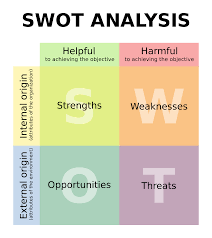 Are you developing a new plan, strategy, or service? For any of these (and for charting the course of your organization), a critical step that you do not want to miss is the development of a Strengths-Weaknesses-Opportunities-Threats (SWOT) analysis.


 Applied to your organization’s adoption of new social media, you will need to keep in mind how risk-friendly or risk-averse you want to be in seeking out new types of channels. While emerging social media tools frequently look free at the outset (no out of pocket costs), the downside cost of investing the time necessary to identify, understand, and populate new social media channels can be prohibitive. Depending on your resources for communication and content creation, you may be an organization that wants to take a wait and see stance until others have made it through the disillusionment phase and you can begin to see successful applications discovered through enlightenment.
 Your brand voice will set the tone for all of your communications; but is often overlooked by organizations when they develop messaging and redesign their brand. As a result, depending on who the author of any given communication on your behalf may be, your communications can sound haphazard and jarring to your audiences – creating inconsistencies that are confusing and even uncomfortable.
 What kinds of metrics will give you a quick feel for how interesting and engaging your content is to viewers?
 Marketing Swarm: Collaborative Marketing