Author Archives: kathylev

Unknown's avatar

About kathylev

Kathryn Levesque is a Director of Marketing for a nonprofit educational seervices agency in Massachusetts. Formerly a publisher and product marketing director in the healthcare space, she has 45 years of product marketing and management experience, and specializes in product and brand development, service design, and content marketing.

Content Marketing: The secret sauce for non-profits

Content Marketing: secret sauce imageCheck out upcoming posts in a new category – Content Marketing.

Content marketing includes a great deal of the messaging you’ll put out on social media, as well as the stories I’ve talked about that tell the human side of your work.  It is much, much more than that, however.  It offers the opportunity and challenge for you to look at and create content in multiple media, in multiple ways, that adds real value to your communication.  We used to call it “soft marketing”.

Nothing is more powerful as a way to build your brand and extend your reach.

Here are a few quick perspectives on content marketing to kick us off.  These were offered on the NewsCred blog (www.blog.newscred.com) , which has some nice pieces on content marketing in general.

  1. Content Marketing is all the Marketing that’s left.” – Seth Godin
  2. We need to stop interrupting what people are interested in and be what people are interested in.” – Craig Davis, former Chief Creative Officer at J. Walter Thompson
  3. Content Marketing is a commitment, not a campaign.” – Jon Buscall, Head of Jontus Media
  4. Either write something worth reading or do something worth writing about.” – Benjamin Franklin
  5. You need to create ridiculously good content – content that is useful, enjoyable and inspired.” – Ann Handley, Chief Content Officer, MarketingProfs
  6. Traditional marketing talks at people. Content marketing talks with them.” – Doug Kessler, Creative Director and Co-Founder at Velocity Partners
  7. Content builds relationships. Relationships are built on trust. Trust drives revenue.” – Andrew Davis, Author of Brandscaping
  8. Content is the reason search began in the first place.” – Lee Odden, CEO of Toprank Online Marketing
  9. Brands need to take the phrase ‘acting like a publisher’ literally.” – Dietrich Mateschitz, CEO of RedBull


Setting guidelines for your brand

wwrd_brandbook_xfeed-10_2048What is in a brand identity guide?

One of the final products of all of the work, thinking, and decision-making that will go into the establishment of your brand should be a document containing the elements that are needed to carry it forward. Without formally identifying your goal, primary messages, and voice, there’s little hope of ensuring the consistency in your communications that’s essential to keeping your brand remarkable and memorable.

Many are familiar with the brand style guide that is a typical outcome of working with a graphic designer on your logo, colors, and overall look. These visual elements should absolutely be a part of the overall brand identity guide; and the guide should tell readers where and how to use logos, icons, fonts, and so on. I would strongly recommend that you not forget your online presence. If you are working with an outside designer, it’s a good idea to identify a designer or firm that is experienced with mixed media and online elements; and consider asking them not only for logo treatment, fonts, and graphic icons and elements needed for your main ideas and topics, but also for website button and icon art – and if you are considering a redesign of your website, possibly menu and page mockups. This remains the best way to ensure that your visual look will carry through on the web; but not all graphic designers are comfortable with mixed media.

It doesn’t stop with your brand’s visual style guide.

The style guide for visual elements of your brand is one piece of the overall direction that you’ll provide in order to help staff, vendors, and external consultants or others fully understand your brand. Following, you’ll find my general list of the critical pieces of information that belong in any Brand Identity Guide.  Please feel free to use it as a checklist, or modify it for your project.  You can also download a copy of the  Brand Identity Guide; and we’ll talk more about a number of these elements and how to develop them in other posts.

Brand Identity Guide

Introduction for staff and other readers of the Guide

  • Why are we doing this work? What do we hope to achieve with a strong brand?
  • The overall voice and style of your brand and organization – description of the voice (with examples). How will we talk to our audiences? Formally, informally –what is the voice we strive to use and how will it be executed?
  • Your main audiences – who are your main audiences (customers), what do you want them to know and do? Will your voice vary depending on audience?
  • Are there cultural and social/emotional considerations in wording and imagery that you choose as part of your consistent voice to your audiences? What are the words we like to use and words we don’t like to use?
  • Storytelling voice: If human interest “stories” are important to your overall messages and communication plan, your Identity Guide should contain a sample of how one of these might look, along with notes about process – where will stories come from, who should they focus on, to what purpose, and how will you ask for and obtain permission from subjects.
  • What types of images or art should we consistently try to leverage in our communications?
  • Keywords we want our customers and community to use to describe us (embedded in the brand)

Brand Messaging (This is messaging that should be used by all, consistently, when talking about your organization in any context)

  • Tag Line: This should be 3-8 word statement that conveys the essence of your brand value quickly and in a memorable way. It can and should be viewed alongside the organization’s name and logo.
  • Naming System: when do we use the full name, acronym, with/without tag line; and how to use it in conjunction with the names of our distinct services, programs, or sub-brands. This also describes when to use the organization logo.
  • The organization’s Branding Statement – 60-80 words. The Branding Statement is not a description of the services you provide; rather it is meant to convey who and what you are and what your unique promise is to your customers. The branding statement should be developed in a way that can strongly position you against competitors and help you to stand out from others.
  • The summary description of the organization – boilerplate – use in press releases, fact sheets, annual reports, on the website, and as standard text in brochures and other pieces. What are you, how long have you been around, what services do you provide and to whom? This is not an exhaustive list – it should also be limited to 60-85 words at most.
  • Positioning statement: This is a valuable statement for internal use by your staff, sales, and communications specialists. From this statement, they’ll be able to readily draw the main components that differentiate you from competitors in terms of value, benefits, style and voice. These can be used in conversation, proposals, and the creation of ongoing messages. This will help to focus your stakeholders on how you are different from your competitors. This may or may not be accompanied by a brief analysis of main competitors – the strengths and weaknesses that are driving your positioning.
  • Statement of key benefits of your organization and brand for customers, stakeholders, and partners. This is a place to elaborate upon your brand statement by listing and clarifying what your primary brand benefits are. What’s best about you? Explain what you mean by the terms you use – words like excellent, high quality, caring, customizable can all become a blur due to over-use. What do they look like in relation to your work? What, exactly, are you promising? Remember that the benefits of your brand should be hallmarks that carry consistently across all that you do. If your brand has sub-brand, programs or services related to it, these are attributes that all should share.
  • Product/service features: If you have a specific product or service that is primary to your brand, your brand guide should contain the language that you want others to use in describing the most important features of the product or service. Features are not benefits. (See features v. benefits blog post) These are a straight up description of what your product or service includes or does that’s important to a purchase decision.
  • Content vocabulary and usage across media (the architecture): Where do we use these different pieces of content, and are they used differently in different communication efforts and media? How do we use our names, titles – what do we call our staff, and how do we put people in touch with them? Are there things we should say in every communication, things we should save for only some?

Visual Assets and Style Guidelines

  •  Logo: Depending on the length of your organization name and whether you’ve chosen to incorporate a tag line, you may need multiple versions of this graphic. Think about the simple logo art, logo with organization name shown stacked or horizontally, Logo with and without the tag line incorporated. Don’t forget to ask for versions that can be used in both print and on the web; and versions to use as avatars in social media. You’ll also need to consider a version that is shown in reverse white on a background color, if your guideline allows for this.
  • Color palette: what are the colors, both in print and on the web, that will belong to your brand? where and how will they be used?
  • Brand font and size, usage of bold, italics, etc. What kind of headlines and sub-heads will be consistently used in your communications?
  • Text elements: What line spacing will be your standard? How will you handle paragraphs and bullets in your corporate communications?
  • Icon graphics for main ideas: If you have main ideas or types of content that can best be displayed with a graphic icon, make those part of your style guide.
  • Background colors and white space – make sure to identify and direct how your communications will use white or other background colors in your efforts. This should not be left to chance or individual preference.
  • Visual elements associated with your brand. In creating communications about/for you brand, should they only use photography? Info graphics? Cartoon based artwork? What types of subjects should be shown, ideally? Are there guidelines about the size and placement of such graphics when used?

Website Guidelines

  • Website purpose
  • How and where your website URL will be shown.
  • Guidance on sub-URLs – when and where to use vanity URLs connected to your brand
  • Online elements: does your brand’s visual identity require a specific way to display links? Web icons? Button graphics?  How about menus? What font and type size should be used on the web?
  • Website target audiences – who are they, what are they seeking, and what do we want them to do on the site?
  • Suggested keywords for the site
  • Proposed menu focal points, based on purpose and target audiences
  • Draft sample messaging/copy for home page, how brand content vocabulary and voice will be executed on the web.
  • If available, page mockups should show how the main types of website pages will be laid out.


Ask not what the Press can do for you..

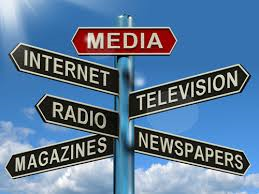
mediaAttended an interesting conference today produced by the Human Service Forum. The last session of the day offered a panel of local/regional members of the media, and they shared some illuminating thoughts, which I’ll pass on to you.  We heard from a regional news magazine, network television station, radio station, and local weekly and daily news representatives.  Some of what they had to say echoes the thoughts provided in my earlier post, on press releases.

In addition, just a few underscores that are really helpful. For those sending press releases, announcements, and even photos, by way of pushing content to the media:

  • Find out what your chosen media outlet wants to report on before you send releases, and tailor them to both the style and the type of content they are seeking.  Many news outlets have had to cut back on reporters in this recession, and they do welcome articles that are well written, in their style (safe to use AP style), without a lot of gimmicky formatting. Keep it simple and information based.
  • Interesting nugget from one news representative: reporters are often (most often) not in the office, and functioning virtually via mobile devices.  If you are sending a press release, it may be optimal to copy and paste it into your email. Sending the release as an attachment just means the reporter has to have the capability of opening whatever format your file takes – and they may not be able to do it.
  • Keep your news timely and, if you can, tie it to current events. Most panelists said they receive at least 100 press releases a day. And while they are happy to get them, they won’t use all of them.
  • Photos are OK, even good, to send. But if you are going to send a photo, don’t send one that is substandard. It needs to be clear, and focused (not blurry), feature no more than 3 people in the photo (more is too many to distinguish in print), and carry the names of those pictured. 200 DPI jpegs, captioned, are best for the newspapers.

Relationships Matter.

Of particular interest to me was some discussion about establishing yourself as a source for the news media. Releases about your work and events are great, but to create a relationship where you become a trusted source, you should consider your role as a subject matter expert. One voice today spoke about creating a mindful strategy, where a nonprofit organization identifies those subject areas where they have real expertise; and then creates a media plan including monthly “news” releases sent to their targeted media connections that don’t necessarily have self interest in mind.  This begins to build an identity for you that says you are go-to source for expertise on a given topic (for instance, in my industry, education). If you do this, do your homework first. Your monthly “news” should attend to current events and strive to actually be helpful to reporters.

Once you have begun to be viewed as a go to source that can be relied upon for perspective, good information, and helpful quotes or interviews, you may be contacted for an interview as news breaks in your space. If this happens, make yourself available. Reporters seeking additional commentary on a story are on a short string – and they have looming deadlines.  Take the call, every time, and be available or make your experts available when needed.  It will pay off as your relationship with the press becomes less “push” and more “pull”.


Audiences won’t wait- on your website or elsewhere

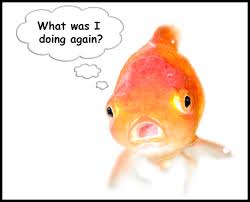
goldfishOn your website or in your offline communications, it will always be important to keep your communications simple, clear and direct – and ensure that your readers get what they came for in as little time as possible.

Why? There are all kinds of statistics and studies about the average attention span.

It’s shrinking. That’s important to you when you are looking to get a message across.

According to the attention span study published in early 2014; conducted by National Center for Biotechnology Information, U.S. National Library of Medicine, the 2013 average human attention span is now 8 seconds. In 2000, it averaged 12 seconds. And just for fun, the current average attention span of a goldfish is 9 seconds.

On the web, a recent U.K. Study found that the average person browsing the web switches between devices used to do so an average of 21 times an hour. When you are writing or designing for the web, take care to include key information front, and know where you want your visitors to next. Studies have shown that 32% of consumers will start abandoning slow sites (and slow searches) between one and five seconds. On a average web page with 593 words of text (and that’s not that much), visitors will likely read only about 28% of the words you have displayed.

Finally, if you use video content on the web, know that while images and video have tremendous power to tell a story, your script will need to be short. Viewers of videos on the web will on average watch for only 2.7 minutes before they tap out. And that statistic was gathered in studies that pre-dated the wide use and acceptance of Vine.  Vine videos are a maximum of 6 seconds. So, if you are putting the expense and time into taping a video that communicates your mission or service, keep it short.

This is great perspective to keep strongly in mind (post it on your office wall!) when you are designing or writing a web page. But it pays to realize that even offline, the impact of our online habit and behavior is impacting our collective patience. If you are not editing yourself, do that. Do it multiple times, and then ask someone else to read what you’ve written.

There’s no doubt that briefer communications will pay off in a better chance to capture your audience’s attention. But in addition, it is an expression of your respect for their time.

Short and sweet: Power of your tag line

Whether you can capture your essence in three little words, or it take eight – a tag line is a powerful way to create the most memorable and clear statement of what makes you unique in the eyes of your audiences. It can be the cornerstone of your other consistent brand messages; and the work that you do to arrive at and agree upon the right tag line can be a process that will clarify priorities for your whole organization.

It’s hard to narrow your focus.

Making a decision to select one idea from all of the powerful values and beliefs at the heart of your organization is tough.  It’s also crucial to your ability to communicate quickly and readily that which is most important and will differentiate you from others. Nonprofits in particular have a lot to say about their mission.  But they acknowledge that, when it comes to talking about their work, they aren’t saying it well enough.

You’ll find an interesting article on the GettingAttention.org blog, written by Nancy E. Schwartz; the organization’s president. It’s called “Getting to Aha! The Nonprofit Marketer’s Top Challenge“.

In the article, Ms. Schwartz talks about a 2012 survey of 1,566 nonprofit leaders. 84% of nonprofit leaders surveyed characterize their messages as difficult to remember. 71% point to their tag lines as least effective.

Why does the tag line matter? I don’t even have one.

Your audiences are busy, harried, and overwhelmed. For the most part, it’s a safe bet that they often don’t have time to read through complex explanations of your mission and services. A well chosen, powerful tag line can create a memorable connection to your most important idea; and because of it’s brevity, will be used more than any other message you develop, in more places – from email signatures and conversations, to your website, to business cards and stationery.

How do I get to a powerful tagline?

1. Find the words that are the most important cornerstones of your mission, services and focus. If you have multiple (and diverse) departments and programs, it will be an inclusive exercise to identify what words rise to the top that are shared between all of your programs – remember that your joint exercise is to define what is important and different about the organization as a whole, not its parts.

2. Keep the audience at the center of your message. How do you want your audiences to feel about you? Tag lines are benefit oriented, and they set the stage for your tone and voice as well as conveying the thing that makes you stand out from the crowd. They can attract to you the customers and stakeholders who see themselves as members of your club.

“You’re in good hands” (Allstate)

“Like a Rock.” (Chevrolet)

Because I’m worth it” (L’Oreal)

2. Take a look at what other organizations like yours are saying. Is everyone’s message the same? Does it make an important idea somewhat homogenous? If everybody is saying the same thing, it may really be the key idea, or it may be clutter. Think carefully about how your organization is unique. You may have the same goals, but perhaps your approach is completely different.

“Listen to the future” (Chicago Youth Symphony Orchestras)

“Where learning takes flight” (Aviation Museum and Discovery Center)

3. Talk to your key audiences. This can be a casual discussion, survey, or focus group; but a tag line is meant to convey quickly to your audience the idea that is relevant to them. It’s not all about you, it’s all about them.  You may find in those discussions that you’ve chosen words that carry negative connotations for them, or words that simply mean nothing to them, but much to you. Make adjustments where they are indicated. This is a great step for learning more about the voice and tone that will resonate with your audiences. Is direct and straightforward better? Does your voice need to be friendly and personal, or professional and grave?

“Nothing stops a bullet like a job” (Homeboy Industries – Workforce Development)

Holding power accountable” (Common Cause)

4. Once you have a tag line, use it consistently. You will want to make it part of your branding style guide; and inform all of your staff members about how and where to include it in their messages.  Make sure that when they use it, they get it right. And give it time to take root.



Just the Facts? 8 Tips for Creating Press Releases

reporterThe power of the press for reaching out to your larger community is a given, and a well conceived press strategy should be part of every company’s plan – but this is especially true if you represent a non-profit organization. I’m guessing that many of you send the occasional press release to local newspapers, and you may also post your news on your own website.

If you are working with limited time and resources and don’t have a dedicated PR professional on your staff, then you especially need those efforts to pay off in positive, upbeat stories about your work.

Are there basic rules to sending out a media alert or press release that will have a better chance of bearing fruit?  I’ve outlined my top 7 tips here:

1) Develop a template for these that will save you time when you are developing them. Make sure you already have a page blank handy that is set up with your contact information, organization name and logo,  It should have a place for:

  • The title of the release – it can be creative, but please make sure it says what the topic is. Don’t make the reporter or editor receiving it have to search to know what it’s about.
  • The date, and city/state where you (or your news) are located.
  • The press contact: Always include the name, title, telephone # and email address of the person that should be contacted for an interview or for more information.
  • At the end of the release, include a brief “about us” paragraph or two about your organziation; and include your website URL. This should ideally be the same paragraph every time, for consistency, make it a “boilerplate” part of your template. You can always add a line or two that describes the specific department or program that the release is about, to tailor it.

2) It’s not the great American Novel. When you write the release, remember that you are writing for news outlets. It’s OK to include background about the human interest side of your story. But remember that you are writing the release so that it can be useful to reporters and editors – who will want to use the information in their own work, with their own voice. Give them great material to work with, but don’t fall in love with your own words. Be succinct.

3) Edit yourself with a checklist – does it have all the facts they will need? What happened, when, where, to whom, and why is it news? If you are covering one of your own programs or events, did you remember to say that you were the sponsoring organization?

4) Can I quote you? If a reporter or editor really wants to do in-depth work on your topic, they will call you and others for interviews, and will use their own quotes.  But a really good quote or two is gold for a time-pressed editor; so make it a consistent part of your style to include these. They are also your opportunity to provide perspective beyond the facts.

5) Get ready to lose control. Once the press release has left your desk and been sent to news publications, it is in their hands. They have no obligation to use everything you sent, verbatim. They will more than likely take the pieces from the release that work for them within their story. An ethical reporter will not mis-communicate the facts of the story. But your perspective and point of view may not end up in the final cut.

6) Know your reporters.  Particularly if local news outlets are important to you; but for national outlets as well. If you are doing this right, you won’t simply be peppering the landscape with your alerts and releases, hoping something sticks.  That isn’t worth your valuable time or theirs. Make sure your release topic is relevant to the new outlet, and especially to the reporter, that receives it. Less is more; develop a short list of reporters and editors that you will place your release with; and get to know what their preferred beat is.  What topics and issues do they typically cover, and how? Don’t add them to your send list if you know nothing about them. (Google works great when you want to check out past articles from a new publication or reporter/editor.)

I ran across an interesting blog post on the NonProfit Communicator blog. Lisa Bertagnoli does a good job of explaining what to do – and what not to do – to get her attention with a release.

http://communitymediaworkshop.org/npcommunicator/people-to-pitch-lisa-bertagnoli-freelance-writer/

7) Don’t forget the web.  You may be accustomed to sending all of your press releases to local newspapers; but is it really national news? Does it have regional implications?  Apart from your own website (where you should be posting every release you create), there are some good and inexpensive news services like PRNewswire.com that will post your article on their site and distribution it to news outlets with a wider scope than you probably have. You may gather greater attention to your work by strategically posting selected, very important stories on such a service.  And with well-planned key words, the release may get more attention from even your local reporters; when they receive in their Google alerts.

8) Have a plan.  You can easily inundate your local press outlets with way too many stories that don’t interest them, in which case, they’ll turn you off.  On the other hand, if this isn’t in your comfort zone, or you are a busy person wearing multiple hats, then you may not remember to make strategic use of media exposure. Don’t wait until you are reacting to a negative story; create a calendar and a plan for sending selected news items on a recurring basis that feature the positive, relevant work that you do.

Celebrate the troops

You have a great grasp of your customers and stakeholders, influencers and decision-makers; and you think you fully understand your target audiences.

Think again.

Are you remembering your own staff?

Your staff could be the single biggest messaging asset you have. If you are looking for champions in your tribe, who could be a more enthusiastic cheerleader about the work that you do than those folks that are doing the work themselves?

If they get it.

Your brand, your mission and your philosophy is hopefully something that your staff remembers to incorporate into their work every day. But too many companies and agencies, in hot pursuit of their customers or funders, do not take the time to tell the story at home.

It may be that your departments are siloed, and don’t really understand or hear about eachother’s work.  They may hear about what’s happening across the board, but not understand how it all hangs together to advance your mission.  If your mission is written in jargon or fails to tell the story of what you really believe, then perhaps they just don’t it at all.

Consider the small amount of time it takes to find just one story each week about something your staff has done – something extraordinary, or just something spot on – to support your mission. Do a shout out to all of your staff members. Give congratulations, and kudos – you can do this via email, interoffice memo, posting it on a wall or at a meeting – pick a method that isn’t time consuming. Do this every week, drawing attention back to how each of these acts supports and strengthens your real mission – and soon these little stories will build into a loyal internal fan base that knows your story and knows how to tell it.  More importantly, they’ll know how to live it.

Why is a tag line important?

Seems a bit silly to spend time sitting around trying to capture everything you are in 3 or 4 words. Your mission, values, and key benefits are much bigger than that – aren’t they?

Of course they are.

But the work that it takes to capture your essence in a sound byte is not at all silly; in fact, it’s an essential exercise in discipline. It can capture who your customers, members, and fans are; and it serves a very useful purpose in quickly uniting you with your tribe over your shared values.

  • Just do it (Nike)
  • Think different (Apple)
  • Because you’re worth it (L’Oreal)
  • You’re in good hands (Allstate)
  • Quality is job one (Ford)
  • It’s not just for breakfast anymore (Florida Orange Growers’ Association)
  • That was easy (Staples)
  • A mind is a terrible thing to waste (United Negro college fund)
  • Takes a lickin’ and keeps on tickin’ (Timex)
  • For a living planet (WWF)

Your mission, your promise and your brand

They are indeed complex, but place yourself in the mind of your customer and ask yourself “so what?” Then ask it again, and again. What can you come up with to answer it in 5 words or less?

Taglines are about making decisions.

Timex could talk about the visual beauty and simplicity of their watch design, the fact that their watches are an inexpensive, yet good value. So what? What do you really want in a watch, anyway? Timex watches are for people who don’t want a Rolex. Don’t want the bother, don’t want the expense, and don’t want to worry about damaging it. Just want it to tell time, reliably.

If you have done any strategic planning for your agency or business, you’ll likely have a mission statement, and core values – particularly if you are a non-profit. If you haven’t looked at those lately, take them off of the shelf and review them again. Non-profits spend a great deal of time arriving at a mission statement that is meaningful for them; and they are often excellent statements of purpose and approach. They are also (usually) somewhat wordy for the average stakeholder-on-the-street, and may not be at all memorable.

Try it. You’ll like it.

What can you give?


promiseWhat’s the promise, and can I keep it?

Your mission as an organization is about your aspirations, your passion, your beliefs. It tells your audiences what you wish to accomplish and promises to pursue that to the best of your ability, with all that is in you. You will work to improve how you deliver on your mission, and how you deliver may evolve over time.

Your brand is a promise. It can also aspire, but never forget that the promise offered by your brand carries with it an expectation of delivery and consistency.

We will do certain things in a certain way.  We hold to these truths and values. You can rely on us for this.  Be careful about what you choose to promise with your  brand. When you select what is most important for your brand to convey to your audiences, your work will be scrutinized against that standard.

Your brand offers a clear message about what it is that makes you unique – which means making choices about what you want your brand to convey. What is it about your work and your approach to it that distinguishes you from others?

What’s in it for me?

Your brand is also about your relationship with your customers. Unless you are opening your doors for the first time, your loyal fans already trust you for something very specific, that benefits them or that they also believe. Is your brand message going to be consistent with that perceived promise?  Before you go all in to make a statement about your brand, find out if it matches your customers’ and fans’ experience of you.  If it’s not, figure out why not. You may be making an aspirational promise that you have neither the experience nor the will to deliver on.

Do you know how to do what you are saying you’ll do? And is it something your customers value, or a complete departure from how they currently see you?

If you don’t know, ask.

Mom always told us that, and she was right. Understanding how your customers perceive you is an important element of moving forward to a stronger brand. Do they have a sense of what you believe, and can they articulate why they would choose you? There are a lot of ways to ask, and really, they are not scientific. You are looking for qualitative, not quantitative feedback. But I would always recommend contacting at least 5-10 of your top customers or partners, and having a conversation. You might want to ask:

  • What made you choose us to work with instead of the alternatives?
  • What do you think we stand for? Is it something you also believe in?
  • What three words would you use to describe us as an organization? Are these things important to you?

What’s in it for them?

I’ve worked with companies that have done research up, down and sideways to identify what specific attributes their customers thought they had. But in many of those studies, I’ve observed one critical omission that made them miss the point. Once you know what attributes or beliefs your customers think you offer, please ask them how important those are to them.

At the end of the day, if you are a service provider, or a non-profit agency, you need the things that are unique to your brand to be an important benefit for someone.  You need fans. So connecting the dots to your customers and stakeholders is an integral part of understanding your brand.


A picture is worth a thousand words

buildingYour brand promise is a lot more than a logo, tagline, home page, or picture.   But if you have not pursued some consistency in how you visually represent your brand; if there is dissonance between what you are trying to say and how you are saying it, then your underlying message about your commitment and your work will not be clear or convincing.

If you haven’t recently done an audit of your public facing messages and images for consistency with your branding message, it’s probably long overdue. Remember, though, that a visual audit proceeds from a strong brand statement.

Go back to your mission

Make sure that you’ve clearly identified your customers, influencers, and most importantly – who the people are that benefit from your work. Your visual messages should convey the heart of the work – what you hope to accomplish for those beneficiaries that your organization is passionate about.

Is your work about a building? Or is it meant to make lives better for people? If you are a nonprofit agency with a people-focused mission and your websites, brochures and media messages focus on your building; then you may be communicating pride of place. But you are not showing the heart of your work to your audiences.

Agencies that focus on educating kids and are not using visuals that keep the kids at the forefront are not only missing an opportunity to convey an important message about their mission. They are also taking a risk that the public will perceive their heart and their commitment to be in the wrong place. Materials, web pages, and commercials created to further ASPCA work don’t focus on the people. They focus on the animals. AARP does not show you lots of images of small children, but rather vibrant, aging retirees.

And unless you are Habitat for Humanity, consider keeping pictures of a building in the background, not the forefront, of your message.

A note about locating images for your work

If you lack the available resources to take your own photos of your work, you can start with stock images. Both istockphoto.com and shutterstock.com offer fairly inexpensive images for download and use. If you can find one or more images there that do a good job of showing off your work and your audience, it can start you off. Searching these sites may also help you to identify what you want to ideally convey that you can’t find in stock photos; and will need to pursue on your own. The downside: you may not be the only one using a stock image. The upside: commercially available photographs have all their ducks in a row as far as model/subject releases are concerned. If you take your own photos and people are the subjects, you should always get permission from the subject to use the image (or their parent/guardian, if they are a minor).