
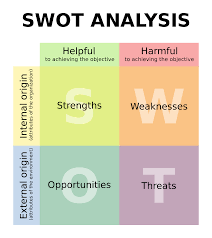
 Are you developing a new plan, strategy, or service? For any of these (and for charting the course of your organization), a critical step that you do not want to miss is the development of a Strengths-Weaknesses-Opportunities-Threats (SWOT) analysis.
It is best done in collaboration with your team; and in order to do a good job, you’ll need to do some homework.
The best template tool I’ve found for this purpose is offered as a free download at DIY (Development Impact and You). And by the way, DIY offers a wide array of hugely valuable templates and tools, with simple guidelines on using them. If you are embarked on strategic planning or service design, bookmark this site.
Be totally honest when you do a SWOT analysis, because fudging negatives and overemphasizing positives will not help you. Done right, the exercise can help you to surface some high potential activities or design elements that you very well might not have thought about otherwise.
DIY has a good explanation at the link provided about how to use the SWOT. Don’t choose too many items to put in each box – I’ve found that it’s helpful to let the group brainstorm as many as they like, and then narrow the selection down to the top 5-6 at most.

 Marketing Swarm: Collaborative Marketing