
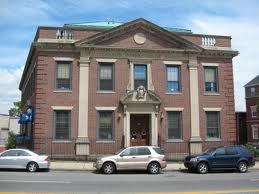
 Your brand promise is a lot more than a logo, tagline, home page, or picture. But if you have not pursued some consistency in how you visually represent your brand; if there is dissonance between what you are trying to say and how you are saying it, then your underlying message about your commitment and your work will not be clear or convincing.
If you haven’t recently done an audit of your public facing messages and images for consistency with your branding message, it’s probably long overdue. Remember, though, that a visual audit proceeds from a strong brand statement.
Go back to your mission
Make sure that you’ve clearly identified your customers, influencers, and most importantly – who the people are that benefit from your work. Your visual messages should convey the heart of the work – what you hope to accomplish for those beneficiaries that your organization is passionate about.
Is your work about a building? Or is it meant to make lives better for people? If you are a nonprofit agency with a people-focused mission and your websites, brochures and media messages focus on your building; then you may be communicating pride of place. But you are not showing the heart of your work to your audiences.
Agencies that focus on educating kids and are not using visuals that keep the kids at the forefront are not only missing an opportunity to convey an important message about their mission. They are also taking a risk that the public will perceive their heart and their commitment to be in the wrong place. Materials, web pages, and commercials created to further ASPCA work don’t focus on the people. They focus on the animals. AARP does not show you lots of images of small children, but rather vibrant, aging retirees.
And unless you are Habitat for Humanity, consider keeping pictures of a building in the background, not the forefront, of your message.
A note about locating images for your work
If you lack the available resources to take your own photos of your work, you can start with stock images. Both istockphoto.com and shutterstock.com offer fairly inexpensive images for download and use. If you can find one or more images there that do a good job of showing off your work and your audience, it can start you off. Searching these sites may also help you to identify what you want to ideally convey that you can’t find in stock photos; and will need to pursue on your own. The downside: you may not be the only one using a stock image. The upside: commercially available photographs have all their ducks in a row as far as model/subject releases are concerned. If you take your own photos and people are the subjects, you should always get permission from the subject to use the image (or their parent/guardian, if they are a minor).
 Marketing Swarm: Collaborative Marketing